
7 October 2026 · 3 min read
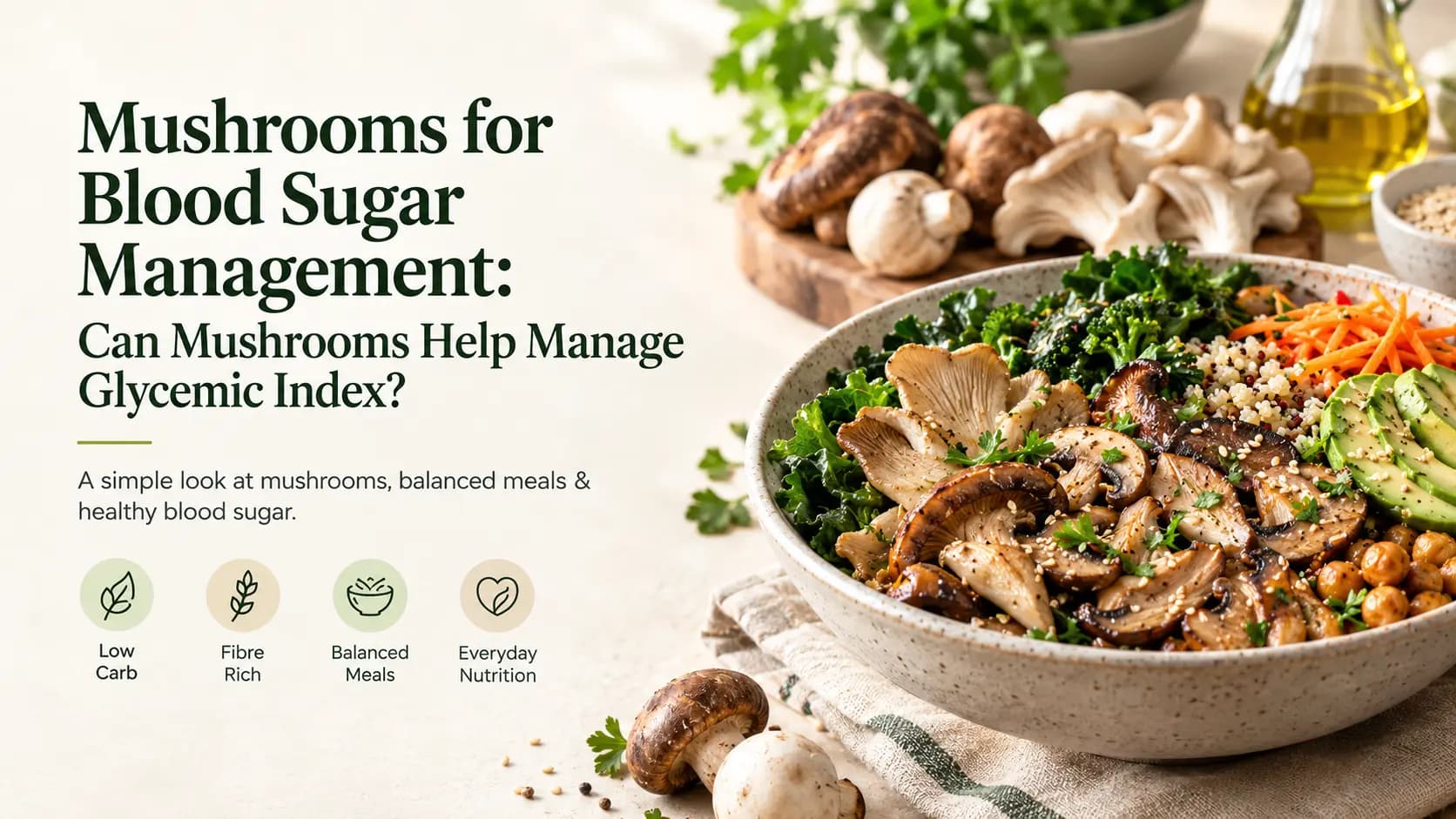
Mushrooms for Blood Sugar Management: Can Mushrooms Help Manage Glycemic Index?
Mushrooms for Blood Sugar Management: Can Mushrooms Help Manage Glycemic Index?
Managing blood sugar does not always mean giving up the foods you enjoy. Sometimes, it is simply about making smarter choices about what goes on your plate. Mushrooms can be one of those simple additions.
Mushrooms are naturally low in carbohydrates and calories, while also providing useful amounts of dietary fibre and protein. Because they contain relatively little carbohydrate, they generally have a smaller effect on blood glucose than many high-carbohydrate foods such as refined grains, potatoes and sugary foods.
Why Are Mushrooms Interesting for Blood Sugar?
When we think about foods that affect blood sugar, carbohydrates are usually one of the first things to consider. Mushrooms naturally contain very little carbohydrate, which makes them an interesting ingredient for people who are trying to manage their blood sugar levels.
Their fibre and other bioactive compounds may also support better metabolic health. More importantly, mushrooms can add substance to a meal without adding a large amount of carbohydrates.
That makes them especially useful when you want to make a familiar meal a little more balanced.
A Simple Way to Lower the Carbohydrate Density of a Meal
One of the easiest ways to include mushrooms in a blood-sugar-conscious diet is to use them alongside, or in place of part of, a more carbohydrate-heavy ingredient.
For example, you can add mushrooms to vegetables, soups, eggs or whole-grain dishes. This can lower the overall carbohydrate density of a meal while adding texture, flavour and volume.
It does not have to be complicated. A handful of sliced mushrooms added to an omelette, a vegetable stir-fry or a bowl of soup can make an everyday meal more satisfying.
Oyster and Button Mushrooms: Easy Everyday Choices
Oyster mushrooms and button mushrooms are particularly easy to include in everyday meals. They can be sautéed, grilled, added to soups, mixed into vegetable dishes or cooked with familiar spices.
Their mild flavour also makes them easy to combine with other nutritious foods, allowing you to build meals that are satisfying without relying heavily on refined or sugary ingredients.
Mushrooms Can Help Make Meals More Filling
Another reason mushrooms can be useful is their ability to make meals feel more substantial.
They add texture, flavour and volume, which can make a meal more enjoyable and filling. For someone trying to manage portions or maintain a balanced eating pattern, this can be a practical advantage.
Instead of thinking only about what needs to be removed from a diet, mushrooms offer a simple way to think about what can be added.
An Important Point About Mushrooms and Diabetes
Mushrooms should not be considered a treatment or a way to cure diabetes. Blood-sugar management depends on the bigger picture, including the overall diet, portion sizes, physical activity, medication when prescribed, and regular glucose monitoring.
Think of mushrooms as a nutritious ingredient that can fit into that bigger picture—not as a magic food or a replacement for medical care.
The Simple Takeaway
For people managing blood sugar, choosing foods that are naturally lower in carbohydrates can be a useful part of building balanced meals. Mushrooms are one such food—easy to cook, versatile, naturally low in carbohydrates and calories, and capable of adding flavour and substance to everyday dishes.
Whether it is oyster mushrooms in a stir-fry, button mushrooms in an omelette or mushrooms added to a hearty soup, a small change on the plate can make everyday eating more interesting while supporting a thoughtful approach to nutrition.
At The Hortizon, we believe that healthy eating should not feel complicated. Sometimes, better choices begin with something as simple as adding more of what nature already provides.


