
25 October 2026 · 3 min read
What Are Mushrooms? Understanding Mushrooms, Mushroom Spawn & Cultivation
What Are Mushrooms? Understanding Mushrooms, Mushroom Spawn & Cultivation
Mushrooms are fascinating organisms belonging to the kingdom Fungi. Unlike green plants, mushrooms do not contain chlorophyll and therefore cannot produce their own food through photosynthesis. Instead, they obtain nutrition by breaking down organic matter and absorbing soluble nutrients from the material on which they grow.
What Are Mushrooms?
A mushroom can be defined as a macro fungus with a distinctive fruiting body that is generally visible to the naked eye. Depending on the species, the fruiting body may be epigenous (above ground) or hypogenous (below ground).
The visible mushroom is only one part of the organism. Beneath or within the growing medium is a network of fine fungal threads known as mycelium. The mycelium plays an important role in absorbing nutrients and developing the mushroom's fruiting body.
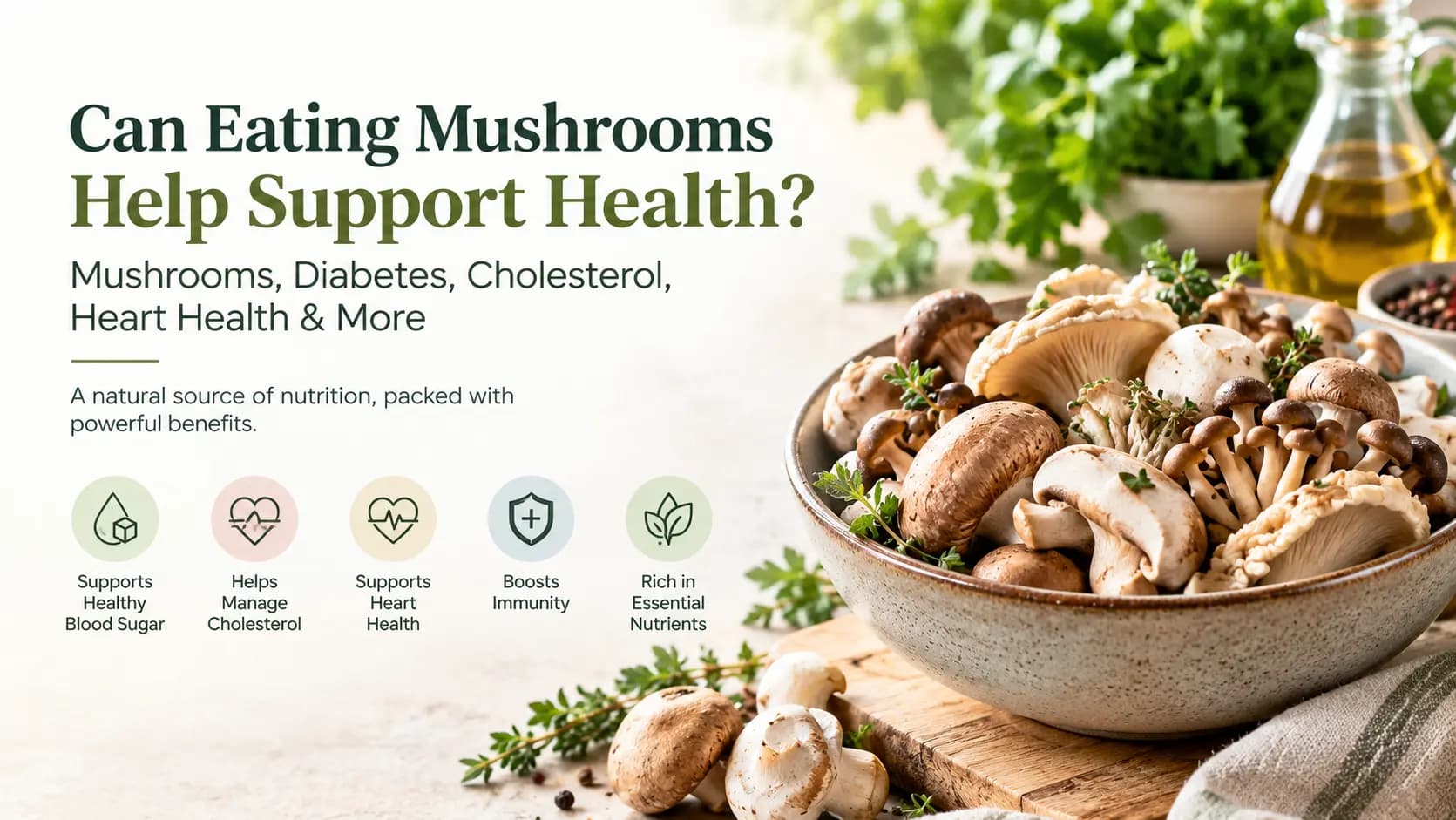
Mushrooms are widely cultivated and consumed around the world, with species such as oyster mushrooms, button mushrooms and shiitake mushrooms being popular examples of edible mushrooms.
How Do Mushrooms Get Their Nutrition?
Mushrooms lack chlorophyll, so they cannot manufacture food like green plants. Instead, fungi produce a wide range of enzymes that help break down complex organic substrates on which they grow.
Once these complex materials are broken down into simpler, soluble substances, the fungus absorbs them for nutrition and growth.
This natural ability to decompose organic matter is one of the most important characteristics of fungi and is also central to the process of mushroom cultivation.
Do Mushrooms Have Seeds?
Mushrooms do not reproduce through seeds like flowering plants. Instead, they produce spores, which are microscopic reproductive structures.
Spores can develop into fungal growth under suitable environmental conditions. However, commercial mushroom cultivation generally does not begin by directly sowing spores into the growing substrate. Instead, growers commonly use mushroom spawn.
What Is Mushroom Spawn?
Mushroom spawn is a carrier material, such as sterilized grain, that has been fully colonized by the mycelium of a desired mushroom species.
It acts as the planting material in mushroom cultivation. The spawn is introduced into a suitable mushroom substrate, where the mycelium continues to grow and colonize the available material. Under appropriate environmental conditions, the colonized substrate eventually produces mushroom fruiting bodies.
Common spawn materials may include sterilized grains such as wheat, sorghum, millet or other suitable carriers, depending on the mushroom species and cultivation method.
Spawn and Seeds: A Simple Comparison
In simple terms, mushroom spawn is to mushroom cultivation what seeds are to plant cultivation.
The comparison is not scientifically identical because mushrooms are fungi and reproduce differently from plants. However, it is a useful way to understand the role of spawn for someone new to mushroom growing.
Seeds contain the starting material for plant growth, while mushroom spawn contains established fungal mycelium that can grow through a suitable substrate.
The Role of Mycelium in Mushroom Cultivation
Mycelium is the vegetative part of a fungus. It consists of a network of microscopic filaments called hyphae.
When mushroom spawn is introduced into a suitable substrate, the mycelium spreads throughout the material and absorbs available nutrients. Once the growing conditions are suitable, the fungus can develop fruiting bodies—the mushrooms that we eventually harvest.
Therefore, healthy spawn and vigorous mycelial growth are important foundations of successful mushroom farming and mushroom production.
Understanding the Mushroom Growing Process
Although cultivation methods vary according to species, the basic process of mushroom cultivation generally involves:
Selecting a suitable mushroom species
Preparing an appropriate substrate
Introducing quality mushroom spawn
Allowing the mycelium to colonize the substrate
Providing suitable environmental conditions for fruiting
Harvesting the mature mushrooms
Temperature, humidity, ventilation, light and substrate conditions can all influence mushroom growth and fruiting. Different mushroom species have different cultivation requirements.
Why Mushroom Spawn Matters
Quality spawn is an important part of commercial and small-scale mushroom cultivation. Healthy, actively growing spawn can help establish the desired mushroom species in the substrate and support consistent mycelial colonization when appropriate cultivation conditions are maintained.
Understanding the difference between spores, mycelium, spawn and fruiting bodies is therefore essential for anyone beginning mushroom cultivation.