
7 October 2026 · 3 min read
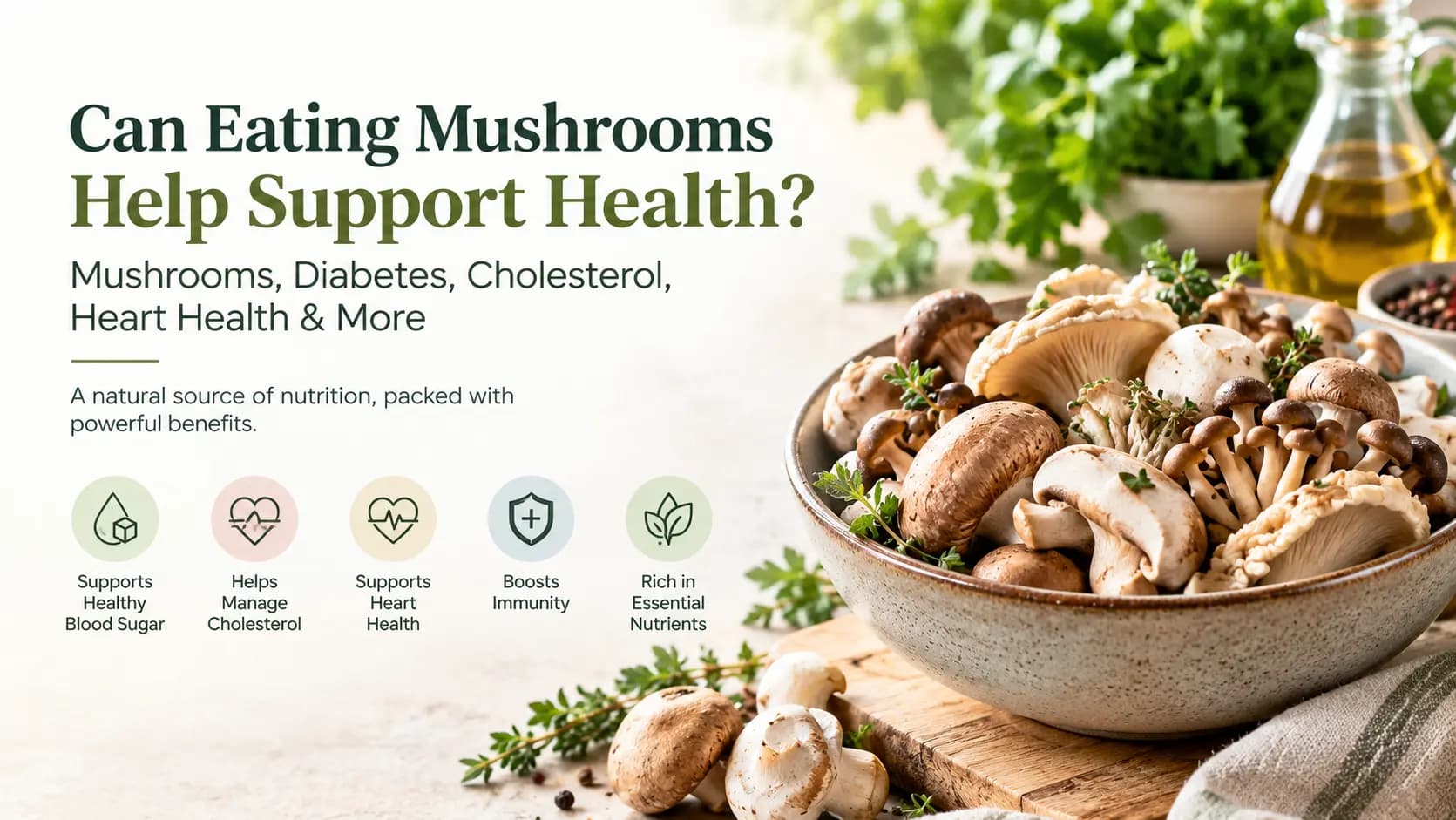
Can Eating Mushrooms Help Support Health? Mushrooms, Diabetes, Cholesterol, Heart Health & More
Can Eating Mushrooms Help Support Health? Mushrooms, Diabetes, Cholesterol, Heart Health & More
Lifestyle-Related Health Problems and Mushrooms
Today, many of us are dealing with lifestyle-related health problems such as diabetes, obesity, high cholesterol and cardiovascular disease. At the same time, people are becoming more interested in simple foods that can add more nutrition to their everyday meals. This is where mushrooms have started getting a lot of attention. Mushrooms are not medicines, and they cannot replace proper medical treatment. But they contain several nutrients and naturally occurring compounds that may support health when mushrooms are included as part of a balanced diet. Research on mushrooms is still developing, but some areas are particularly interesting.
Diabetes and Blood Sugar
Oyster mushrooms and some other edible mushrooms contain relatively little carbohydrate and provide dietary fibre and beta-glucans. Because of this, they can fit well into meals designed to be more balanced and lower in rapidly digested carbohydrates. Some studies on Pleurotus ostreatus (oyster mushroom) have reported improvements in measures such as fasting or post-meal blood glucose although the evidence is not yet strong enough to consider mushrooms a treatment for diabetes. For someone managing blood sugar, mushrooms can be a useful addition to meals alongside vegetables, pulses, whole grains and an appropriate protein source.
Heart Disease, Cholesterol and Cardiometabolic Health
Heart disease is closely connected with factors such as high cholesterol, high blood pressure, obesity and an unhealthy diet. Mushrooms are naturally low in calories and fat and contain fibre, potassium and other bioactive compounds. Oyster mushrooms has found some promising results regarding cholesterol, triglycerides and other cardiometabolic markers.
So rather than thinking of mushrooms as a cure for heart disease, it is better to see them as one nutritious food that can be included in a heart-friendly eating pattern.
Beta-Glucans and Immune Responses
One of the most interesting components of mushrooms is beta-glucan. Fungal beta-glucans, including those from Pleurotus ostreatus, suggests that they may influence certain immune responses.
Mushrooms and Cancer Research
Mushrooms have also attracted considerable interest in cancer research. Mushroom-derived compounds in several cancers, including improvements in quality of life and, in certain specific groups, survival outcomes. This is an important distinction: eating mushrooms should not be presented as a way to cure cancer or replace chemotherapy, radiation or other medical treatment.
Mushrooms, Healthy Weight and Everyday Nutrition
Mushrooms can also be helpful from a simple dietary perspective. They are generally low in calories while adding texture, flavour and some fibre to food. Replacing part of a calorie-dense ingredient with mushrooms can make a meal lighter without making it feel boring. For people trying to maintain a healthy weight, this can be a practical advantage.
Mushrooms as Part of a Healthier Diet
Perhaps the most interesting thing about mushrooms is that they sit somewhere between being an everyday food and a source of biologically active compounds. Mushrooms should not be thought of as a magic solution to today's diseases. Instead, they can be one small but useful part of a healthier diet.
Whether it is oyster mushrooms, button mushrooms or other edible varieties, adding them to regular meals can be an easy way to introduce more variety and nutrients into the plate.
At The Hortizon, we see mushrooms not simply as something we grow, but as a food that connects cultivation, nutrition and everyday living. The more we understand about what grows around us, the more thoughtfully we can choose what goes on our plate.


